
This is part 1- Covering the function and journey of the placenta in birth.
Form and Function of the Placenta
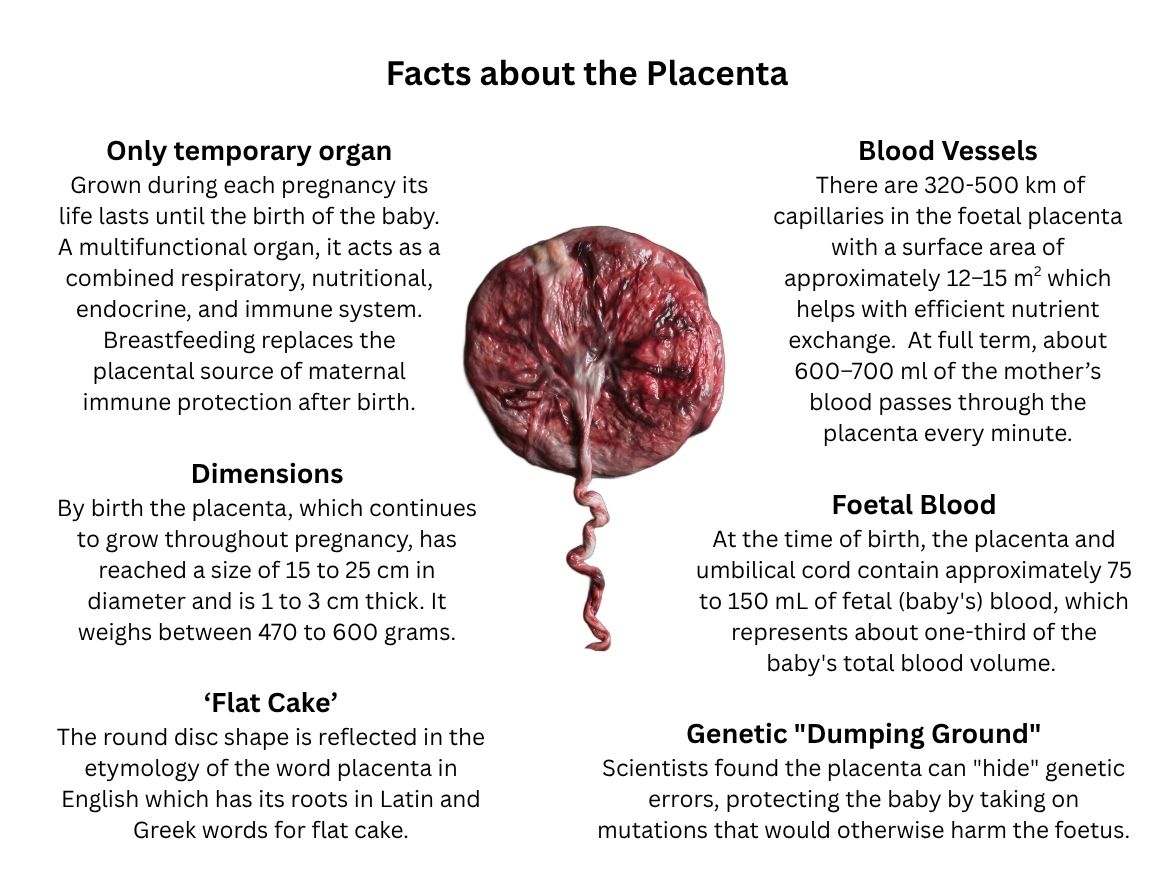
The placenta is the final stage of the birthing process. It is the most overlooked and undervalued organ yet is identical genetically to the baby and is of utmost importance throughout the pregnancy.
As we saw earlier in the course, this temporary organ is formed from the fertilised egg. The blastocyst attaches to the uterus lining with the outer layer of the blastocyst forming finger like projections called villi which penetrate into the maternal blood vessels. These develop into this life giving organ that keeps the maternal and foetal blood separate whilst allowing nutrient and waste exchange to take place.
The Tree of Life
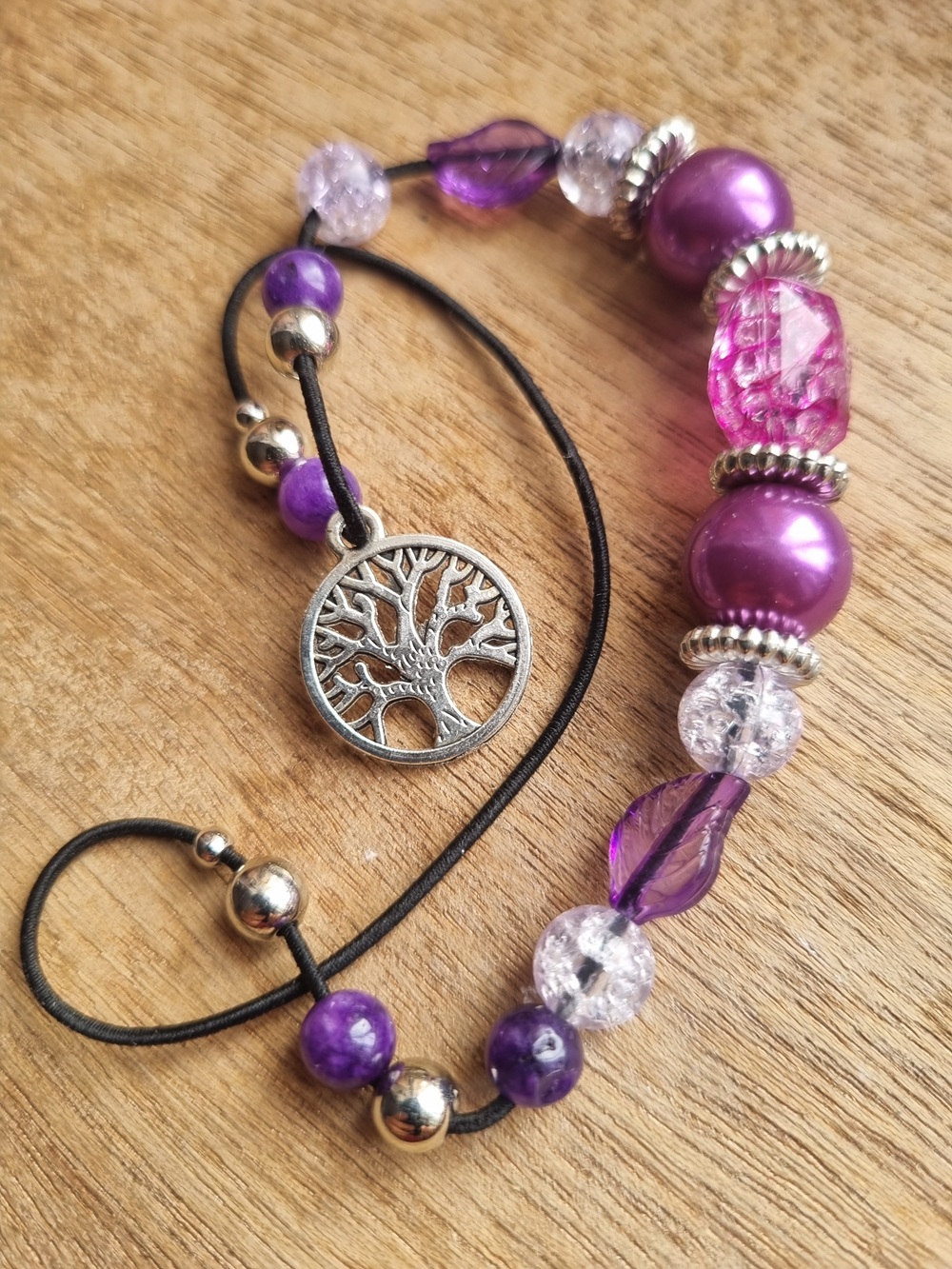
This remarkable organ is embedded into symbolism that surrounds us in our everyday life. You have likely seen it metaphorically represented in many images as the ‘tree of life’ in artwork, jewellery and other forms. Once you start looking you see this symbolism represented everywhere in medical, cultural, and artistic contexts both in a contemporary setting and historically.
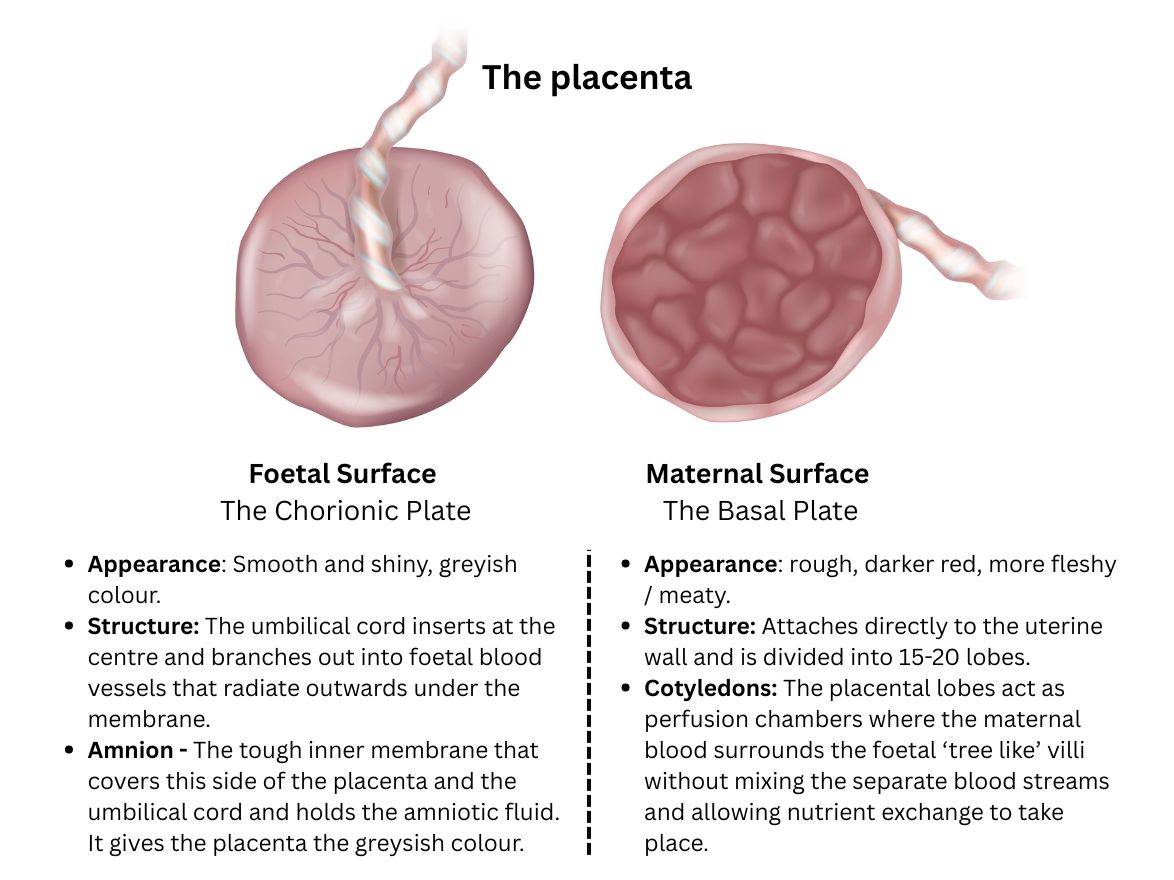
When you look at the foetal side of the placenta, it really does look like a tree. The umbilical arteries and veins split into many smaller vessels (the villi) which resemble the branches of a tree with the umbilical cord representing the trunk. ( see diagram below)
The analogy of a tree of life is also accurate in function as well as looks. The placenta is essential to the survival and growth of the baby. Its is multifunctional, performing the duties of many organs including:
- Acting as baby's lungs, kidneys, liver and endocrine glands without the maternal and foetal blood systems ever coming into contact or mixing.
- Exchange of vital nutrients, including oxygen, glucose, amino and fatty acids. vitamins and minerals.
- Waste removal, including urea and carbon dioxide.
- Hormone Production: The placenta is also an endocrine organ which produces essential hormones including hCG (human chorionic gonadotropin) , oestrogen and progesterone.
- A barrier It keeps some harmful toxins and pathogens from the mother’s system from reaching the baby. Note that some substances including alcohol are able to pass the placental barrier.
- Immunity- The placenta simultaneously provides passive immunity by allowing maternal antibodies to pass across the placental barrier.
End of life and changing function of the placenta
Having fulfilled its role after being such an important support and provider of life for 9 months, the placenta reaches the end of its life when the baby is born. In an undisturbed birth the placenta will be pushed out from the womb using a continuation of the same process that birthed the baby. This process will typically take from 20 minutes to a couple of hours. Note that in the current medical model there are often rules on how long a hospital will wait for the physiology to complete before wanting to intervene and this commonly sits at 1 hour.
However, and likely not to your complete surprise, it is increasingly rare that this final stage of the process of birth is allowed to go uninterrupted. Nowadays, in medical terms there are generally two options: active or expectant management of the birth of the placenta.
Expectant management is the practice of allowing the body to birth the placenta by itself.
In active management an injection is given, usually into the mother’s thigh of synthetic oxytocin or a mix of synthetic oxytocin and ergometrine. This is sometimes accompanied by traction on the umbilical cord. This causes the uterus to contract quickly and strongly to help the placenta separate from the uterine wall and be expelled. It is designed to reduce postpartum bleeding. In this scenario the placenta usually comes quickly.
There are multiple Cochrane Reviews that show the benefits of this management but crucially these were across all births including those that were disturbed in various ways before this final stage. These same reviews also note that the active management comes with a number of side effects such as higher maternal diastolic blood pressure, vomiting, afterpains, and more women returning to the hospital with bleeding.
There are numerous other studies showing different results when you take into account how the birth went. These include: this retrospective study in NZ Here is a quote from the conclusion - "The use of physiological third stage care resulted in lower levels of blood loss, and less need for manual removal of the placenta when preceded by a spontaneous labour and normal birth."
A 2018 U.S. study, used a latent class analysis and found that in the "physiologic" class (women with low-risk characteristics and more natural birth elements), active management was associated with a higher risk for postpartum hemorrhage (defined as >500 mL) and delayed placental delivery.
It seems that if a birth has progressed in a physiological manner then ending it the same way is likely to be the best option but if there have been many prior medical interventions then continuing with the injection and active management may statistically be safer. Alternatively written as an example of creating solutions to man made problems. (Note that of course the option is good to have in true clinical emergencies.)
After the placenta is born- What happens to the placenta?
Once the placenta is born the process of birth is complete. Except there is more to the story from an energetic and honouring perspective.
Most women that give birth in hospital (most of the modern Western World) never see their placenta.
Many modern women are repulsed by the idea of seeing this ‘piece of meat’ and receive no instruction in the energetic power of the placenta. Many have no idea of the options available to use the placenta as medicine or as part of a sacred ritual to honour the completion of the birth process.
So with most not even seeing it what happens to the placenta?
In hospitals, the placenta is classed as medical waste, specifically 'biohazardous anatomical waste'. In most western hospitals it is incinerated. In many countries you have the right to take your placenta home, in some that is accompanied by signing of release documents. This is not the case everywhere, in some countries such as France it is difficult to do though not impossible. In the USA the law varies by state as to your rights to take your own placenta home. If it is not incinerated then, with prior written consent, it may be used for for stem cell banking for potential future medical treatments and for education and research purposes.
In summary, we treat the placenta as a worthless piece of hazardous material that has no further use (with the rarer exceptions of education/research and stem cell banking). This after death journey for the placenta is in stark contrast to what many indigenous cultures around the world believe and still practice to this day and highlights the missing element of sacred honouring that can be seen at every part of the modern birth experience. It is also in contrast to what other land mammals do.
In most traditional cultures around the world it is assigned a place akin to elder sibling or wise spiritual guide. In my own personal experience I felt the energetic power of the placenta and this corroborates for me the notion that the placenta has its own field of consciousness. In every birth there is a death, reflecting the cycle of life beautifully. This death of the placenta is part of the natural order and yet the way it happens is not honoured the way any other death would be. It is my growing conviction that some of the themes of loss, separation and abandonment alongside grasping and holding on have their roots in the loss of the placenta without care and respect, before the newborn was ready to let go and without an accompanying ritual.
Time for reflection
Spend a little time in quiet and stillness reflecting on your own birth and your placenta's journey and see what surfaces.
Here are some prompts:
- Do you know what happened to your placenta?
- Did your mother get to see it or choose what happened?
- What emotions does reading about the placenta bring up in you?
- Considering themes of loss and longing in your own life are there any mirrors or insights arising in you?
- Connect with the spirit of your placenta as a wise spiritual guide who sustained you during the womb and even though their physical form has passed, their energetic wisdom is here to support you. Ask them what they would like you to know. What wisdom do they have to offer you that will support you in life now?