The Umbilical cord is amazing! It is the lifeline that provides the growing baby with all its physical nutrients until the baby is born and connects you to your mother through the placenta.
Here I will share with you some fascinating facts and the physiology versus modern practice which will inform our work on healing our birth story.
Biology of the Umbilical Cord
The Umbilical Cord has formed by the fifth week of development. The cord is physiologically and genetically part of the foetus not the mother. It contains two arteries and one vein which are covered in a substance called Wharton's Jelly. The cord does not go straight to the mother - it goes to the placenta which is the organ acting as an interface between the baby and mother and allows nutrients and waste to transfer between baby and mother without direct mixing between the two different people and blood systems.
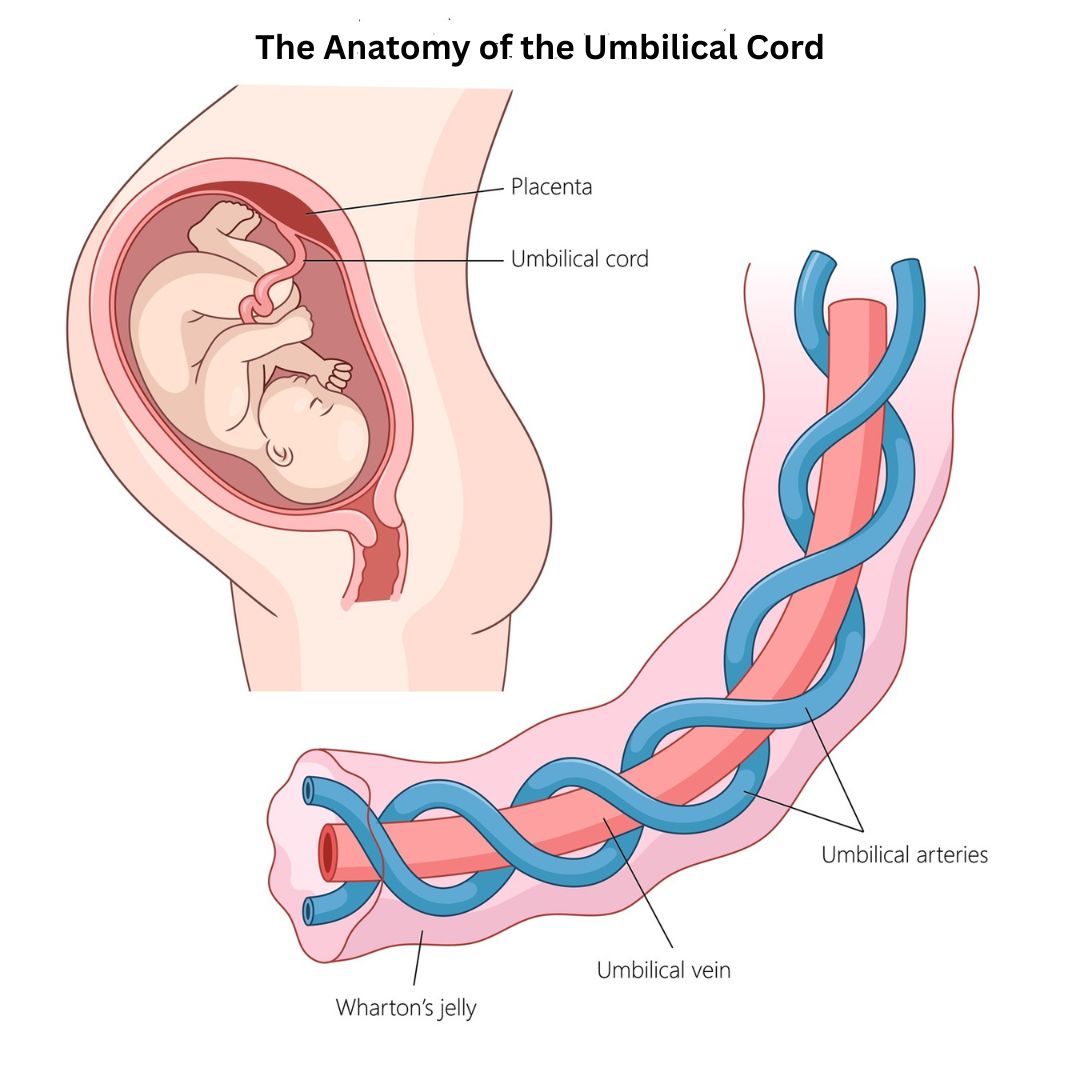
The umbilical vein: Oxygenated and nutrient rich blood from the placenta is supplied to the baby via the umbilical vein
The umbilical arteries: The foetal heart pumps the low oxygen, nutrient-depleted blood through the umbilical arteries back to the placenta.
This is the opposite to what happens in our veins which are allowing low oxygen blood to flow back to the heart and pumping out the high oxygen nutrient rich blood via our arteries.
The Wharton's Jelly: This is a gelatinous substance inside the cord composed of collagen, hyaluronic acid, and rich in mesenchymal stem cells (MSCs). It protects and cushions the veins and arteries to prevent compression of the cord and the stem cells are important for tissue repair as the baby grows.
When the baby is smaller it can move around quite a lot. This means the cord can get wrapped around the baby and in some cases can form a true knot. Due to the Wharton's jelly this wrapping and even a knot is not usually a problem, the cord does not tighten around the knot and can still function as designed.
One of the common stories you will hear about birth is "the cord was wrapped around my neck at birth and therefore...insert disaster story and negative impact.. In truth a nuchal cord, as this is named, happens in one in three births and is rarely a problem on its own from a biological perspective on birth.
Dimensions of the cord: The cord grows to about 50 cm long and 2 cm in diameter. This is an average, some cords grow longer, but the length is approximately the length needed for the baby to reach the breast without severing the cord during the short time that the baby is already born and the placenta is still inside the mother.
What happens at birth
At a physiological birth, the baby is born first, and the cord is still attached to the placenta inside the mother. At this stage the cord is still pumping and active. Around 30% (or up to 50% for premature babies) of the baby's blood is still circulating in the placenta and cord.
The process now enters the third stage of birth, the birth of the placenta, and the cord is coming to the end of its life.
During the time it takes for the placenta to be born - approximately 10-45 minutes on average but can be longer, this blood is transferred to the baby. The cord gradually empties, turns white and shuts down. Having fulfilled its purpose, cutting the cord is the final part of birth. This symbolises literally and figuratively the end of the womb life and the beginning of the baby's life as an autonomous being, physically separate from their mother. Of course, energetically the two are very much still linked, but the form of that connection has changed physically as part of the natural development.
Medical Practice Versus Physiology
In current medical practice in the Western medical world there are two ways of managing this third stage. Expectant or physiological management and active management.
Expectant management follows the evolutionary expectations, the cord is not clamped or cut early and the placenta is born using the mothers own body contractions.
Active management involves routine prophylactic injection of a uterotonic- a jab to the thigh usually to hasten the birth of the placenta, early cord clamping and cutting and in some cases cord traction (gentle pulling) to encourage the placenta to come out. There is plenty of conflicting evidence on the benefits of the active management to avoid postpartum haemorrhage. My theory is that if you have experienced a very disturbed birth with many interventions and your natural body systems are influenced by other substances then it may well be beneficial to continue with active management to mitigate the effects of the previous interventions. There is some evidence that shows that active management following an otherwise undisturbed labour could increase the risk of postpartum haemorrhage.
Regardless, what is very clear is that there is no evidence based rationale in either case for early cord clamping. There are many studies done that document the harm that immediate cutting of the cord can cause and the benefits to delaying clamping and there are many groups campaigning for change, for example 'Wait for White' (where the above figures are quoted.) Yet the practice remains routine in many countries and hospitals. Despite the overwhelming evidence to wait and basic common sense, the hospitals are slow to change. Many hospitals introduced policies to 'delay cord clamping' but these often fall short of allowing the full complement of blood flow to return to the baby. Most of us alive today, who were born in a hospital, likely had our cords cut earlier than we should. It is astonishing to me that the benefits of this are still under debate and that practice has not changed.
There is a lot of fascinating history behind how the practice started in the first place and why it continued. The history behind the practice is beyond our scope but is super interesting.
Read more on the history of cord clamping here
https://pmc.ncbi.nlm.nih.gov/articles/PMC3423128/
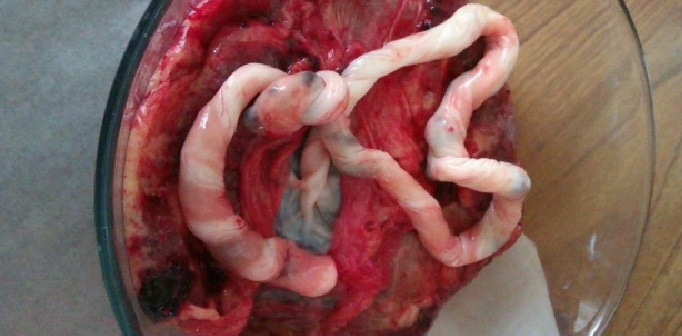
Here is a picture of the cord from my second child which shows a true knot and also a chord that was white when it was cut. Here is a link to a video showing how a true knot can move up and down as it does not tighten due to the Wharton's Jelly. Watch here
The Impact of Sub Optimal Cord Clamping Practices
1. Baby will start life missing 30% of their own blood - up to 40% for premature babies. The prevalence of immediate cord clamping is still causing babies to start their life missing 30% of their own blood. For context, an adult is allowed to donate a maximum of 12.5% of its blood and children are not allowed to donate. In addition, losing 30-40% of the blood is a Class 3 haemorrhage for an adult which requires blood transfusion. More than 40% loss necessitates immediate resuscitation to prevent the heart and other organs from shutting down.
2. They weigh less. By clamping the cord immediately the baby may weigh as much as 214 grams less.
3. Lower ratio of red blood cells. There is a greater risk of iron deficiency anaemia due to the iron in the missing blood. The World Health Organisation estimates that 43% of children worldwide under 5 are iron deficient anaemic and the biggest cause is cord clamping.
4. Potential lack of oxygen during the transition to breathing. This blood helps the baby during the transition form receiving oxygen via the blood receiving it via breathing. Missing blood also means there is less blood in the lungs as well as the rest of the body.
5. Missing stem cells. The foetal blood has a higher concentration of stem cells than later in life and allowing the blood to return to the baby also means a higher concentration of stem cells. Stem cells are special as they are unspecialised but can divide and become other cells, They play an essential part in the body's repair system. They belong in the baby at birth. ( Note there is big business in harvesting and storing cord blood because of these stem cells. The idea being they can be banked and used if you are ill in later life- rather than letting the baby use them now.)
Alternative Options
In practice the cord does not need to be clamped and cut at all. Many people are reclaiming traditional practices including:
Cord ties: Many choose to make their own cord ties to tie the cord after cutting which is done after the placenta is born.
Cord Burning is a practice in some countries. The cord is burned though with a candle in a ritual that cauterises the ends of the cord and takes up to 30 minutes.
Lotus birth is the practice of allowing the cord to drop off by itself which takes between 3 and 10 days. The placenta must be wrapped in herbs and salt to preserve it during this time and this practice means that the mother and baby and placenta have a gentle slow separation process over several days.
Practices from other Mammals and Cultures
Other Mammalian examples:
We are mammals still! And all mammals grow their young inside and nourish them with a cord and placenta system. What do other mammals do with their cord and placenta at birth? Here are some examples.
Great Apes - bite through cord and eat placenta. This is the most common for primates and all mammals.
Chimpanzees - Are an exception. They leave it attached and have a lotus birth
Cats - They bite through the cord and eat the placenta.
Dogs -bite the cord and eat the placenta
Horses- Allow it to snap. Horses are taller and the foal gets to its feet and can walk independently almost straight away.
Whales - As waterborne mammals, they do not ingest the placenta or actively sever the cord. It breaks naturally with the birth of calf and movement of the water
Note - mammals that bite the cord wait for it to stop pulsing to do so.
Other Cultural Examples:
The cutting of the cord has great symbolic significance for traditional cultures around the world. IT signifies the physical separation from the mother and integration into the community. The remaining cord is often seen as a powerful link and may be kept or buried along with the placenta.. The implements to cut, the person who does the cutting, the place of rest, all are chosen with care and honour. This is in huge contrast to the Western approach regarding the cord and placenta as medical waste.
Here are a couple of examples:
Among the Aranda of Australia, “The mother severs the umbilical cord with a stone knife…After a few days she makes a necklace for the infant from the remainder of the cord, and paints a black line over its eyebrow to ward off illness.” ( Quoted in https://traditionsofconflict.substack.com/p/cutting-the-cord)
For the Navajo- "The umbilical cord is the physical representation of the three central relationships that orient a Navajo child in this world—to the mother, to the homeland, to the Holy Spirits. The navel is a lifelong reminder of the roots established before birth." ( Quoted in https://hms.harvard.edu/news/navajo-farewell)
Kutenai of Montana and Idaho place the dried cord into a fringed buckskin bag which hangs on the cradle board.
In parts of India, it may be placed in a gold or silver amulet for protection.
The creating of keepsake boxes or making of jewellery or art with the cord stump is a practice that is growing in popularity in Western Cultures
Reflection Questions:
1. What do you know about how your cord was cut or what do you intuit about your experience of having your cord cut?
2. How has your experience having your cord cut shaped who you are today and your response to life situations?
3. How might this experience be still influencing your connections to others today?
4. How does this experience influence your approach to transitions, change and support?